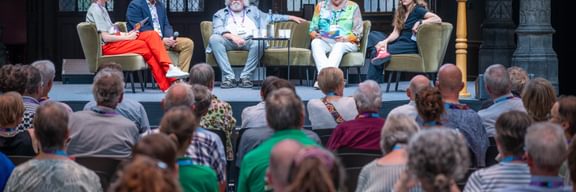
Your audience has changed. Has your congress?
People no longer attend congresses simply to receive information. That information is available everywhere, at any time. So what makes a congress worth attending today? Think about the traditional congress programme: a welcome speech, a keynote, a panel discussion, a coffee break, another keynote, lunch, breakout sessions and a networking reception. It’s a format that has worked for decades.
But while our audiences have changed significantly over the past few years, many congress formats have remained largely the same. Today, participants have unlimited access to information. They attend webinars, listen to podcasts, follow experts online and increasingly use AI to find and summarise information in seconds.
This brings us to a simple but important question that every congress organiser should ask: why would someone travel two hours, or even two thousand kilometres, to attend your event?
From information to interaction
Recent research suggests that the answer increasingly lies in experiences that cannot easily be replicated online.
In August 2026, PCMA reported that organisers are increasingly designing their events around interactive learning, networking and experiences. Participants place growing importance on opportunities to build trust, strengthen relationships, find solutions together and feel personally connected to their professional networks.
Another 2026 study involving 447 event professionals found that interactive formats, such as roundtable discussions and hands-on workshops, performed particularly well in terms of participant satisfaction. Only 7% of respondents considered traditional keynotes the most valuable part of an event.
Does this mean the keynote has had its day? Absolutely not. It simply means that a successful congress needs greater variety.
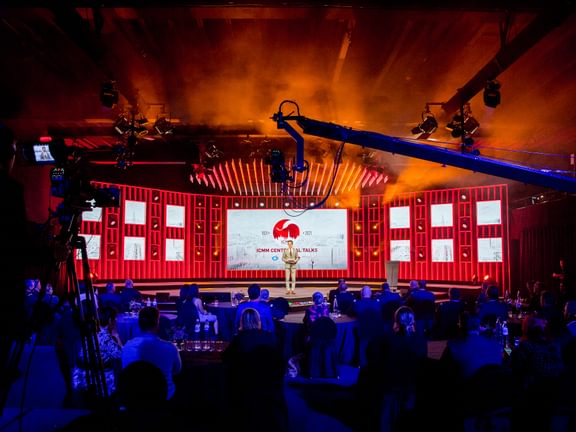
The best congresses aren’t the ones with the busiest programmes, but the ones people genuinely want to attend. Content remains essential, but interaction, engagement and meaningful connections make the difference. So don’t just think about what participants should learn, but above all, what they should experience.
Design a complete experience, not just a programme
Instead of starting with the question “Which speakers should we invite?”, consider asking a few different questions:
- What do we want participants to discover?
- Who should they meet?
- Which conversations do we want to spark?
- What should they remember?
- And perhaps most importantly, what do we want them to do differently afterwards?
This way of thinking changes how you design a congress programme.
This evolution is also changing the role of the Professional Congress Organiser (PCO).
Flawless organisation remains essential, of course. Registration, speaker management, venue coordination, audiovisual support, catering, accommodation, transport and scheduling must all work seamlessly together. But today, a PCO can offer much more by acting as a strategic partner in shaping the congress experience.
At Runmate, we believe that content, format, participant experience and organisation should reinforce one another. Because a congress is much more than a series of presentations taking place in the same building. It’s a carefully designed opportunity for people to come together, learn, connect, exchange ideas and make progress together.
Your audience has changed. Perhaps it’s time for your congress to evolve too.
Sources: PCMA/Convene, Meetings, Made Personal, August 2026; PCMA, What’s Shaping Live Experiences in 2026?, May 2026.