Why Belgium, Why Now?
A changing reality for the organisation of congresses and meetings
By Jan Van den Broeck, Head of Runmate
For decades, choosing a conference destination was largely a question of attractiveness, accessibility and, occasionally, prestige. Globalisation made almost any location viable. Distance was no longer a constraint. Risk was rarely a decisive factor. That era is behind us. Today, corporate decision-makers and association leaders operate in a far more complex environment. One where geopolitics, cost volatility and reputational considerations are no longer background noise, but central to every strategic choice. In that shifting landscape, destinations like Belgium are being reassessed not for what they promise, but for what they consistently enable. Nowhere is this more visible than in how organisations rethink where they meet.
When geopolitics becomes operational
The current tensions in the Middle East and the Gulf region illustrate this shift clearly. Even when specific destinations remain operational and safe, perception travels faster than facts. Risk assessments are no longer purely rational; they are shaped by stakeholder sensitivity, board-level caution and a simple but critical question: can we justify this choice?
What is new, however, is how quickly geopolitical risk translates into operational disruption.
Several airlines have already suspended, rerouted or reduced flights to parts of the region, while others continuously review schedules depending on security assessments and airspace restrictions. Even events located outside affected zones are impacted. Flight cancellations, longer routings and reduced capacity create uncertainty around attendance, increase costs and complicate contingency planning.
For corporate and association events, this changes the equation fundamentally.It is no longer just about whether a destination is attractive but whether it remains reliably accessible.
Destinations are no longer chosen for what they promise, but for what they consistently enable.
The cost reality: energy and economics
At the same time, the energy crisis has reshaped the economics of events. While the most acute phase may have passed, its structural effects remain visible across Europe.
Venues, suppliers and logistics partners continue to operate under higher cost pressure. Energy, staffing and materials all contribute to rising event budgets. These increases are no longer marginal, they require justification at procurement and board level.
What used to be a question of optimisation has become one of accountability. Every euro spent on an event must now demonstrate value.
The shifting role of the United States
Across the Atlantic, another dynamic is quietly influencing global event strategies. The US remains a major MICE destination, but for many international organisations, it is becoming more complex to access and justify. Rising costs, stricter visa procedures and a more polarised political climate are influencing attendance and participation decisions.
For global audiences, the question is no longer whether the U.S. can host large-scale events — it clearly can — but whether it remains the most efficient, predictable and inclusive option.
From global expansion to strategic consolidation
Taken together, these dynamics are not isolated disruptions. They point to a broader structural shift. Organisations are not abandoning international events, but they are becoming more deliberate. Travel distances are being reduced. Risk exposure is being managed more carefully. Event formats are evolving toward regionalisation and hybridisation.
The underlying logic is clear: less complexity, more control.
This marks a transition from a model of global expansion to one of strategic consolidation, where destinations are selected not for their appeal, but for their ability to reduce uncertainty and enable outcomes.
Belgium as a strategic anchor
In this context, certain European destinations are regaining relevance, not by default, but by alignment. Belgium is a particularly interesting example.
It has never relied on spectacle or destination branding to attract global events. Yet in today’s environment, that is precisely its strength. Belgium offers something increasingly valuable: quiet reliability.Politically stable, geographically central and deeply embedded in international institutional networks, it functions less as a destination and more as a platform for connection.
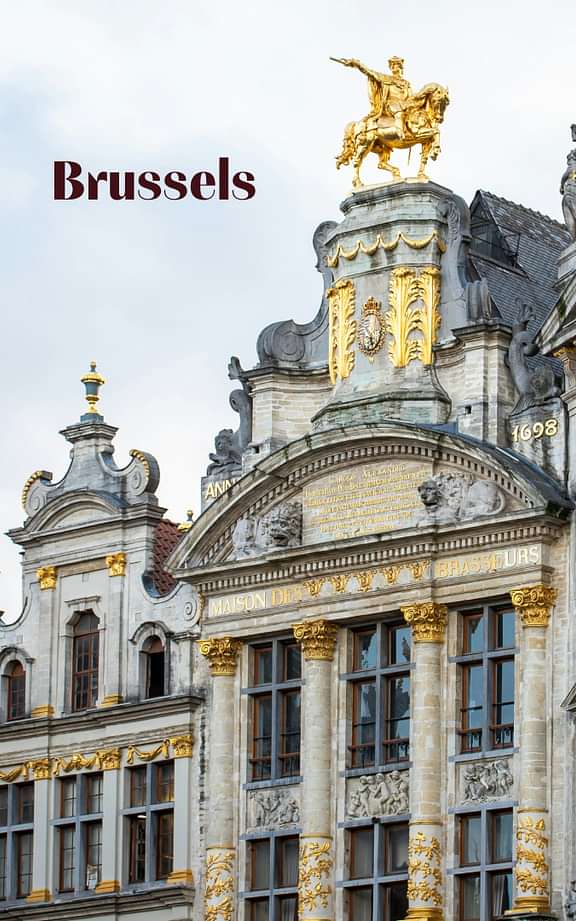
Brussels, in particular, is not just another European capital. It is a place where policy, industry and academia intersect on a daily basis. For trade associations, this proximity to decision-making is tangible. For corporate organisations, it creates access to stakeholders who are otherwise difficult to convene. For trade associations, this proximity to decision-making, research and sector expertise is tangible. For corporate organisations, it creates access to stakeholders who are otherwise difficult to convene in one place.
Accessibility reinforces this position. In a context where long-haul travel is under pressure, Belgium’s connectivity — by rail, air and road — becomes a strategic advantage. It enables international gatherings without exposing participants to the same level of geopolitical and logistical uncertainty.
A relevant example is the IEEE International Memory Workshop 2026, taking place in Leuven and coordinated by Runmate. Organised in collaboration with imec and hosted in one of Belgium’s leading university and research ecosystems, the conference illustrates Belgium’s ability to attract highly specialised global communities. With around 45% of participants expected from Asia — including Japan, South Korea and Singapore — IMW shows that Belgium is not only centrally positioned within Europe, but also credible and attractive for international knowledge audiences far beyond Europe.
From destination to outcome
Perhaps the most important shift is not geographical, but conceptual. Events are no longer judged primarily by where they take place, but by what they enable.
The questions have changed: Who needs to be in the room? What conversations must happen? What outcomes are expected?
In this context, the destination becomes instrumental. It is no longer a backdrop, but a facilitator of meaningful interaction.
Why “Why Now” matters
The relevance of Belgium today cannot be separated from timing. Geopolitical uncertainty, cost pressure and shifting expectations are converging to redefine how organisations approach events. Destinations that offer stability, accessibility and institutional relevance are gaining importance not as a default, but as a strategic response to a more complex world.
Belgium happens to meet those criteria at a moment when they matter more than ever.
Conclusion: Choosing certainty
For corporate leaders and association executives, the implication is clear.
The future of conferences will not be defined by scale or spectacle, but by precision and purpose. Choosing where to meet is no longer a logistical decision — it is part of the strategy itself.
In a fragmented world, the most valuable destinations are not necessarily the most exciting ones, but those that offer certainty, credibility and connection.
And increasingly, that is exactly what organisations are looking for.